

Events and Concerts
Stravinsky: The Rite of Spring
1st half of the concert:
Analysis and explanation of the music with live excerpts from the orchestra, readings and dance.
2nd half of the concert:
A live performance of the whole work
Join us for a whole weekend event celebrating 'The Rite of Spring' at the Civic Hall in Totnes
Saturday 29th November
10.30am - 12pm: A Brass player Workshop with Dave Chatterton
11am - 12pm: A String workshop with Tom Deam
2pm - 5pm: An open rehearsal with the TSO
6.30pm: Pre-concert talk with Sam Richards
7.30pm Concert
Sunday 30th November
10 - 11am: Dance workshop with Loren Gonski and Rosanna Lambert
1.30pm: Pre-concert talk with Sam Richards
2.30pm: Concert
Weekend programme in detail
On Saturday morning at 10.30pm Dave Chatterton will lead a workshop for Brass players. Dave is Principal trumpet in the TSO and knows everything there is to know about being a brass player.
At 2pm you are invited to an open rehearsal with the TSO - bring your children with you - you can come and go as you please and it is a great opportunity for them to experience a full symphony orchestra.
At 6.30pm, Sam Richards (improviser, composer, pianist, author and teacher) will give a pre-concert talk on 'The Rite of Spring in Context'. Entrance is FREE to concert ticket holders.
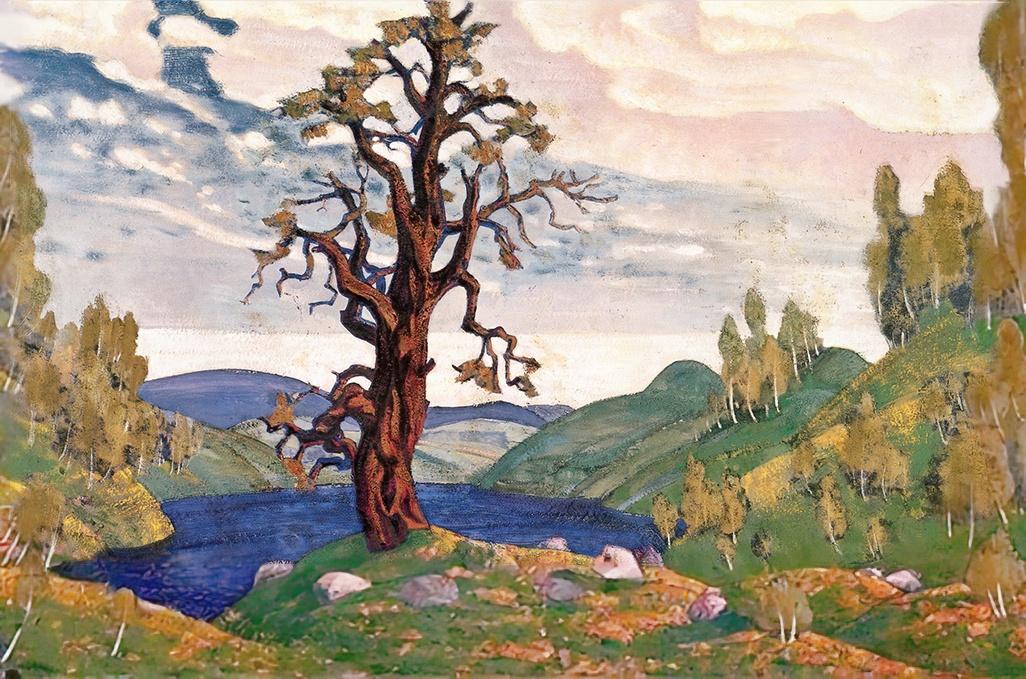
Sam says about the talk: "The music to The Rite of Spring can seem like an isolated monument of the early 20th century. There was nothing quite like it before or after. Or apparently so. Once we probe the context of The Rite... we find a richness of sources. These include the occultism of the designer Nickolas Roerich, the primitivism which the Rite shared with many of the early modernists and, above all, the dimensions of folk melody, rhythm and lore. This pre-concert talk will put The Rite...in the context of its own time as a summation of early modernism rather than only as an exception."
At 7.30pm - the Concert
The Rite from a Jungian Perspective
STRAVINSKY’S ‘THE RITE OF SPRING’
A talk from a Jungian perspective
by
NIGEL GROOM
TSO talk given at St John's Church, Totnes on November 13th 2025
Nigel Groom is a Jungian Analytical Psychotherapist.
Formerly a printer, Augustinian friar, and teacher of Theology and Music, he is also an artist, a spiritual director, and plays violin with the Torbay Symphony Orchestra.
Part 1
TOWARDS THE YEAR ‘1913’ –
A brief outline of music 1900-1912
1900 Schoenberg Gurre-lieder
Elgar Dream of Gerontius
1901 Georges Enescu Romanian Rhapsodies 1 and 2
Dvorak Rusalka
Rachmaninoff Piano Concerto No. 2
Scriabin Symphony No. 1
1902 Debussy Pelleas et Melisande
Mahler 5th Symphony
Sibelius 2nd Symphony
1903 Elgar The Apostles
Delius Sea Drift
Rachmaninoff Preludes Op. 23
Schoenberg Pelleas at Melisande
1904 Mahler 6th Symphony
Puccini Madama Butterfly
1905 Debussy La Mer
Mahler 7th Symphony
Sibelius Violin Concerto (rev. version)
Strauss Salome
1906 Berg Piano Sonata
Mahler 8th Symphony
Schoenberg Chamber Symphony No. 1
Schoenberg 2nd String Quartet
Strauss Elektra
1907 Bartok 1st Violin Concerto
Elgar 1st Symphony
Webern Passacaglia
1908 Ives The Unanswered Question
Mahler Das Lied von der erde
Rachmaninoff Symphony No. 2
Ravel Rapsodie espagnole
Scriabin The Poem of Ecstasy
Stravinsky Feu d’artifice
1909 Bartok String Quartet No. 1
Mahler 9th Symphony
Webern Six Pieces for large orchestra
1910 Berg String Quartet
Ives Third Symphony (completed)
Schoenberg Five Pieces for Orchestra
Stravinsky Firebird
Vaughan Williams Fantasia on Thomas Tallis
1911 Bartok Duke Bluebeard’s Castle
Elgar Symphony No. 2
Sibelius Symphony No. 4
1911 Strauss Der Rosenkavalier
Stravinsky Petrushka
1912 Berg Altenberg lieder
Elgar The Music Makers
1912 Prokofiev Piano Concerto No. 2
Ravel Daphnis and Chloe
Schoenberg Pierrot Lunaire
Strauss Ariadne auf Naxos
Vaughan Williams Lark Ascending
Part 2: DANCING THE DEATH – Towards 1913
Three works in the history of ‘high art’ music composed between 1905 and 1913 which I consider to be of particular significance are the two one-act operas by Richard Strauss, Salome and Elektra, and the ballet, The Rite of Spring by Igor Stravinsky. It would seem thateach of these works in some way resonate powerful zeitgeists or ‘spirits of the age’, and a pre-occupation with the ‘primordial’, the ‘primeval’ and the ‘exotic’, in the collective imagination.
- In 1905 RICHARD STRAUSS’S opera ‘SALOME’, premiered in Dresden.
Based on Oscar Wilde’s play of the same name, the combination of the Christian biblical theme, the erotic and the murderous, shocked the opera audiences from its first appearance. It was banned in various opera houses – including Covent Garden by the Lord Chamberlain Office until 1907. Significantly, the Austrian premiere was given in 1906 under the composer, with no less than Arnold Schoenberg, Giacomo Puccini, Alban Berg and Gustav Mahler in the audience!
In the opera, the teenage princess Salome, King Herod’s stepdaughter, Dances a Dance of the Seven Veils. She is both obsessed and repelled by John the Baptist who is held prisoner in the dungeon, and as a reward for her dance demands from Herod the severed head of the Baptist on a silver salver. Herod resisting her demands eventually gives way and the head of the Baptist is presented to Salome, who, in an outpouring of lust and ecstasy, embraces it, making love to it and kissing the lips. Strauss’s music is sublime and beautifully scored - one critic called it “a perverted liebestod”. The curtain falls, but not before Herod has ordered his soldiers to crush Salome to death with their shields.
The second work which caused a rumpus in the music world came four years later -
- In 1909 with RICHARD STRAUSS’S opera ‘ELEKTRA’, which also premiered in Dresden.
Based on Greek mythology and the tragedy by Sophocles, Strauss’s ‘modernist’ and ‘expressionist’ language was pushed further. It is an amazingly rich score with cacophonous sections and atonal leit-motifs. One critic called the opera “a blood-curdling family saga” and is one of the first works to use polytonality. The work explores themes of vengeance, obsession and family conflict, against the backdrop of psychological turmoil, generated by powerful orchestral music.
The plot
Elektra is consumed by revenge for her father, King Agamemnon’s murder. Agamemnon has been murdered by his wife, Clytemnestra, and her lover, Aegisthus. Elektra, kept in exile within the palace, awaits the return of her brother Orestes to help her avenge their father’s death. When Orestes returns, brother and sister unite and together plot their revenge. Orestes, taking the axe given to him by Elektra, enters the palace and butchers to death both their mother, Clytemnestra, and mother’s lover, Aegisthus. Elektra, liberated at last and in total ecstasy, dances triumphantly before dropping dead.
It will not have escaped you that these two operas are linked with the theme of ‘a dance’ – in each, a dance that ends in death. Which brings me to the third work which also caused something of a rumpus at its premiere four years later – not an opera, but a ballet, which ends with the sacrifice of a young girl, the Chosen One, who dances herself to death -
- IGOR STRAVINSKY’S ‘LE SACRE DU PRINTEMPS’ – ‘THE RITE OF SPRING’ premiered at the Champs-Elysees Theatre in Paris in 1913.
It is not insignificant that The Rite of Spring was first performed on the eve of the outbreak of the 1914-18 War, a cataclysmic war, which was to change forever the whole of Europe and the Western World.
Part 3: 1913: ENCOUNTERING ‘THE RITE’
‘The stuffy conventions of the nineteenth century are receding into the past, and 1913 heralds a new age of unlimited possibility. Kafka falls in love; Louis Armstrong learns to play the trumpet; a young seamstress called Coco Chanel opens her first boutique; Charlie Chaplin signs his first movie contract; and new drugs like cocaine usher in an age of decadence.
Yet everywhere there is the premonition of ruin - the number 13 is omnipresent, and in London, Paris and Vienna, artists take the omen and act as if there were no tomorrow. In a Munich hotel lobby, Rilke and Freud discuss beauty and transience; Proust sets out in search of lost time; and while Stravinsky celebrates the Rite of Spring with industrial cacophony, an Austrian postcard painter by the name of Adolf Hitler sells his conventional cityscapes.’
(1913: The Year Before the Storm by Florian Illies,
German writer and Art historian)
It is as if that first performance of Stravinsky’s The Rite of Spring on the night of 29th May, 1913 symbolized the total breaking up of Europe which had been tottering on the verge of a precipice, heralding the violence and chaos which was to follow, and from which nothing could be the same again. Art, Music, Theatre, Literature all reflected the fading elegance of the fin de siècle, the collapse of the old systems, portending the upheavals to come. Not least were the failed Russian Revolution upsurges in 1905 and in 1912, erupting in complete revolution in 1917 and the murder of Tsar Nicholas II and his family at Ekaterinburg in 1918.
In talking about The Rite, Stravinsky said: “My earliest memory is of the sound of ice breaking on the Neva near St. Petersburg, a sound that marked the beginning of a New Year, a new spring. The strongest memory is also of the songs and dances I heard as a child. It was when finishing The Firebird that I had a vision which came to me and made a deep impression on me of a pagan ritual.”
Stravinsky composed The Rite at Clarens, near Montreux in Switzerland in a small rented room with an upright piano and completed it by the end of 1912 ready for the Ballet Russe Diaghilev production at the Champs-Elysees Theatre in Paris in 1913.
When he had completed the score, Stravinsky played it through on the piano to Diaghilev and the conductor Pierre Monteux. In reference to the section entitled ‘Augurs of Spring’ Stravinsky said “I started to play this chord. Fifty-nine times I played the same chord. Diaghilev said: ‘Will it last a very long time?’ I replied, ‘til the end, my dear!’ And he was silent. Above all it was the rhythm that was shocking to him.”
As the conductor, Monteux recalls, both he and Diaghilev were staggered with what they were hearing and seeing, “before Stravinsky got very far I was convinced he was raving mad . . . the very walls resounded as he pounded away, occasionally stamping his feet and jumping up and down to accentuate the force of the music. Not that it needed much emphasis.”
Later, Stravinsky said of the work, “I heard and I wrote what I heard, I am the vessel through which Le Sacre passed.”
In his 1935 autobiography, Stravinsky described a “fleeting vision”: “I saw in my imagination a solemn pagan rite: sage elders, seated in a circle, watched a young girl dance herself to death. They were sacrificing her to propitiate the god of spring.”
Troubled by these dream sequences he sought the professional opinion of Nikolai Roerich, an artist, archaeologist, scholar and mystic and Russia’s leading expert on folk art and ancient rituals. Roerich was intrigued by the concept and he, together with Stravinsky sketched out a ballet depicting scenes of pagan Russia, and created the stage and costume designs.
He and Stravinsky decided to subtitle the work ‘Pictures of Pagan Russia in Two Parts.’ The first part to be titled ‘The Adoration of the Earth’ comprising seven sections and the second part ‘The Sacrifice’ comprising six sections ending with the Sacrificial Dance of The Chosen One.
It seems that the mainstream culture of the Parisian theatre in 1913 reflected a hunger for themes of sacrifice and pagan rites. The decline of the belle epoch had ushered in an increasing desire for the ‘exotic’ and the ‘primitive’ in the collective imagination.
It was Serge Diaghilev, the impresario and director of the Ballet Russes who laid claim to the production of the ballet and appointed his lover, the dancer Vaslav Nijinsky, to devise the controversial choreography.
There is some dispute as to whose idea The Rite of Spring was initially. Roerich some years after the 1913 premiere claims it was he who had first suggested the outline of a ballet broadly on the theme of a chosen virgin sacrificing herself to death and that Stravinsky then engaged with the idea. It was at this point they had decided to collaborate and create the work. Later Stravinsky laid claim that the initial inspiration was his. The dispute was never to be resolved.
Audience, critics and musicians battled over The Rite. One review denounced the ballet as “Le Massacre du printemps,” and the French composer Edouard Lalo declared, “Never before has the cult of the wrong note been applied with such industry, zeal and ferocity!”
The premiere’s long aftermath included many partings. Roerich went back to Russia; he and Stravinsky parted ways and never saw each other again. Before the year was out, Nijinsky broke off his relationship with Diaghilev and married a Hungarian aristocrat, Romola de Pulszky. Three months later, Diaghilev dismissed Nijinsky from the Ballet Russes, whereupon Nijinsky deteriorated mentally, giving his last public performance in 1917, and ending his days in an asylum before dying of kidney failure.
My encounter with The Rite
I first heard The Rite of Spring on one of the early Red Seal label vinyl lps I bought with my pocket money in 1960 when I was 13 years old. I remember it was the first recording issued with Pierre Monteux conducting the Paris Conservatoire Orchestra. Monteux had conducted the premiere of the Rite in 1913.
The experience of hearing this music was mind-blowing. I was knocked sideways by it. It was as if the formal constraints of the symphony orchestra and traditional harmony had been unleashed at last. I was overjoyed!
The themes of nature and earth awakening, fertility rites and a virgin sacrifice caught my 13-year-old imagination and expressed in a powerful way my own adolescent awakening – qualities which resonate and are brought to the fore in Stravinsky’s music. I found it exhilarating and cathartic and I wanted more of it!
I remember being quite obsessed with the piece for weeks afterwards. Those grating discords, pounding rhythms, and wonderful orchestral textures were visceral and full of energy. It made me want to dance it! After all, it is dance music. I think I must have driven my parents nuts by playing the record at full volume and also trying to convert my school friends and teachers. It certainly threw my violin teacher off balance!
But for all its shock value, what also moved me was the inherent beauty of Stravinsky’s orchestration, the simplicity of the folk themes, the joy and exuberance of the score. I was intrigued by the quality and texture of the instrumentation and lucidity of the writing. It had been a most formative experience for me. From that point on I devoured as much of Stravinsky’s music as I could, quickly followed by other 20th century greats, Mahler, Bartok, Webern, Berg, and Schoenberg.
My relationship to The Rite was complete when I purchased the Boosey and Hawkes score and at last could study Stravinsky’s orchestration, and to my great delight, was able to fathom out how to conduct the final sacrificial dance!
One could have imagined the shock of it all at that first performance in 1913. The first half of the Ballet Russe programme that evening was Chopin’s Les Sylphides followed by Stravinsky’s The Rite of Spring and ending with Borodin’s Polovtsian dances. Remember, this was an audience used to the belle epoch and classical ballet.
In the opening bars of the music with the bassoon solo, laughter and protests from the audience began at once, quickly escalating into a full-scale fracas, insults being shouted and debris flying. Fights broke out between various factions and the gendarmes were eventually called. Backstage Nijinsky stood on a chair desperately shouting cues to the dancers who were unable to hear the orchestra over the din. Pierre Monteux, the conductor kept calm and remarkably, steered the work to its completion. Stravinsky left in despair.
In retrospect we know that part of the uproar was as a response to Nijinsky’s provocative choreography which the audience had found most alarming and which the dancers themselves had been upset and perplexed by. Perhaps not surprisingly, Diaghilev had been rather pleased with the adverse response to the work, and that it had created the scandal which he had secretly hoped for all along.
Part Four: MYTHIC TIME, RITUAL AND SACRIFICE
In expanding our understanding of The Rite of Spring, we need to say something about ‘Mythic Time’ and the ‘primordial’, and ‘Ritual’ and ‘Sacrifice’. And here I draw on the work of Mircea Eliade who was a prominent historian of religion, a philosopher and writer, and like Carl Jung, who I’ll talk about later, is known for his profound insights into the nature of religious experience and myth.
Sadly, we seem to have lost the true meaning and depth of the word ‘myth’ in our society. We hear it so often now as a glib or denigrating term to mean something untrue or false. On the contrary, Eliade says: “Myths in their proper sense are truths about the human condition and therefore living enactments within the human psyche and condition.”
For Eliade, ‘sacred’ or ‘mythic time’ always relates to the time of origins, to the very beginning of things, to our genesis.
It is a ‘cyclical’ view of time as opposed to a ‘linear’ (chronos) view of time and is the power that underlies all sacred and religious rituals and acts. Sacred Rites and rituals are to be understood as returning mankind to the beginnings of things and entering ‘primordial time.’
For Eliade this ‘primordial time’ was a time before recorded history when the gods were active, the earth came into being and the foundations of cosmic order were established. On festivals, religious mankind returns to the beginning and enters ‘primordial time,’ which is equivalent Eliade says, to “true, real and meaningful existence”. ‘Myths’ then, in this sense are to be understood as truths about the human condition.
It is an ACTIVE experience where ‘religious’ man re-enacts through rituals the creation of the universe and the cosmos.
In this ‘cyclical’ or ‘mythic’ view of time, the victory of creation over chaos is not final, but temporary. Each year the forces of chaos threaten anew. They must be defeated again in order for the world to continue. ‘Religious’ man participates in the defeat; he performs the rituals which stave off the forces of chaos, repeats the sacred acts of the ancestors, re-enacts the cosmogony (i.e. the original creation myth), and thereby secures the continuation of the universe, the world and humanity. Human beings recover that ‘sacred’ and ‘mythic time’ through ritual and drama.
When rituals are performed, the myths they relate to are brought back to life, making the past event a present experience. Rituals require us to cross thresholds into ‘sacred spaces’ or ‘liminal spaces’ (from the Latin word limen meaning ‘threshold’), where we are initiated into the ‘sacred mysteries’, most notably, through a ‘sacrifice.’*
In our approach to Le sacre du printemps it might help us to think of it not just as a ballet, or a ceremony to be enacted, but more meaningful as a ‘re-enactment of a sacred Ritual.’
As Mircea Eliade reminds us: The difference between CEREMONY and RITUAL is:
A Ceremony is meant to maintain the status quo, but Ritual always reveals the shadow and is meant to change us or at least transition us.
TRUE RITUAL like true drama, always creates a catharsis, or emotional cleansing and requires ‘sacrifice’ or ‘giving up of one’s ego-self’ in order to make change or transformation.True renewal and rebirth requires that we make a sacrifice.
In the 9th volume of his Collected Works, Psychology and Religion: West and East, Carl Jung discusses the psychological meaning of ‘sacrifice’ at length:
“Sacrifice proves that you possess yourself, for it does not mean just letting yourself be passively taken; it is a conscious and deliberate self-surrender, which proves that you have full control of yourself, that is, of your ego, which eventually as part of a re-birth, also needs to be relinquished.”
*I am reminded here of the Roman Catholic Mass which is not a ceremony or memorial, it is a ‘sacred’ ritual and ‘sacrificial Rite’. In the words of the liturgy of the Mass it celebrates ‘the sacred mysteries’, that is, through the death of Jesus upon the cross and His resurrection comes the salvation of all creation.
We might qualify Jung’s statement though by saying that before you can become renewed or changed, you have first to take a leap of faith and ‘let go’. You don’t know beforehand how it’s all going to turn out - whether the outcome will be creative or destructive. It is a risk. Real change and new life can only come when you stop clinging to the old certainties, to one’s addictions, to maintaining the status quo and the safety of comfort zones.
Interestingly, the word ‘sacre’ or ‘sacrifice’ means ‘holy’ and the root of our English word ‘holy’ means ‘whole’ – therefore, to become a whole person entails a ‘giving up’ a ‘letting go’, the Greek word is ‘kenosis’ which means ‘self-emptying’, a dying-to-the-self, a ‘self-sacrifice.’*
How do these themes relate to The Rite of Spring?
What we see happening in the ballet and music is a progression of circle dances symbolizing the harmony and unity of the community moving towards a ritual to choose a single sacrificial victim. Through these dances we witness the strength and cohesion of a community, the ecstatic state of being together, the intoxication and a sense of victory, the violence of the community** being enacted upon the victim, culminating in the sacrificial dance. This sacred rite thus ultimately acts as a propitiation, it salvages the community, restores the ‘primordial’, the world order, and gives birth to Spring.
*From a Christian point of view we might say Jesus put this in terms of ‘losing one’s life’ in order to gain one’s life – dying in order to be born anew. (The Greek word ‘kenosis’ is used, which means ‘self-emptying’ or ‘emptying out of the self’).
**Renee Girard who was influenced by Freud, pointed this issue of violence in human society in his work La Violence et le sacre. For Girard ‘Violence’ and ‘the Sacred’ share a duality within the human psyche and underpins society as a whole.
Part 5: JUNG, THE ARCHETYPES AND THE SHADOW
Sigmund Freud and Carl Jung worked together up to the outbreak of the First World War in 1914. They were pioneers in developing a broad understanding of the archaeology of the human psyche and the human condition, which saw Freud’s breakthrough in psycho-analysis into understanding the human Unconscious through the Interpretation of Dreams. Their work in depth psychology and psycho-analysis unearthed the layers of the Conscious and Unconscious life of the human psyche and instincts.
Eventually, and perhaps inevitably, it was in that fateful year of 1913 that an irreconcilable split developed between the two men – mainly on Freud’s insistence that sex and the Oedipus Complex was at the root of all pathology of the human psyche and Jung’s insistence that sex was only one aspect at the root of human desire and striving, and that other factors which he termed ‘archetypes’ broadened the canvas in understanding what made people tick and where pathology was rooted.
The Archetypes and the Individual and Collective Unconscious
As a psychiatrist and psychoanalyst, Jung devoted his life to analysis with his patients, to developing his archetypal theory and to studying the Individual and Collective Unconscious.
Jung describes the collective unconscious as “a deeper layer, which does not derive from personal experience and is not a personal acquisition but is inborn, possessing contents and modes of behaviour that are more or less the same everywhere and in all individuals.” The contents of the collective unconscious, the ‘archetypes’ he says, “reveal the hidden secrets of the soul through profound images.”
He saw ‘archetypes’ or ‘myths’ as having deep resonances across cultures and time spans and that they contained within them cosmic or eternal truths or expressions within the human psyche, both individually and collectively. Jung believed that these often manifested in dreams, visions, fantasies, rites and symbols, and arose spontaneously from the unconscious, and that they were innate in the human psyche.
The Archetype of the Shadow
One of Jung’s main ‘archetypes’, the Shadow, he describes as “the negative side of the personality, the sum of all those unpleasant qualities we like to hide, together with the insufficiently developed functions and the contents of the personal unconscious.”
For Jung, people unknowingly subdue their shadow because it represents the darkest aspects of the psyche that hearken back to the ‘primordial’ and ‘primeval’ in all of us. We easily deny the uncomfortable and disturbing aspects of ourselves. It is others who often point out elements of our shadow to us which we are quick to deny.
Jung saw that the personal path to wholeness for each person necessitated integrating both the positive and negative aspects of ourselves, of bringing to consciousness the ‘unconscious’, including our shadow, a process he termed ‘Individuation,’ and that it was a life-journey of psychological growth and transformation, moving towards greater self-understanding, wholeness and authenticity. This process of ‘individuation’ was not about becoming isolated or self-centred, but rather about achieving a deeper understanding of oneself, and one’s place in the world, and of becoming a more authentic human being.*
Jung viewed the Shadow archetype as being not only within each person at an unconscious level but also within whole communities and societies at an unconscious collective level where it becomes denied and repressed. These
*Michael Tippett the composer, who had been through a Jungian analysis as a young man, often alluded to the destructiveness of the shadow both individually and collectively and wove it into his operas, such as The Midsummer Marriage, The Knot Garden etc. Here I am reminded of the words in his oratorio ‘A Child of Our Time’, in the final section as the solo tenor and chorus sing ‘I would know my shadow and my light. So shall I at last be whole.’
unconscious and destructive aspects of the shadow are then often projected on to an ‘other’, an ‘alien’, a ‘stranger’, who becomes a ‘scapegoat’, powerfully manifesting itself in the perpetration of violence, persecution and annihilation of that individual, community or group.
As Jung said, “the more we attempt to control, subdue or deny the shadow in our individual and collective conscious life, the blacker and denser it becomes in our unconscious and is projected outwards onto others.”
Indeed, it was Jung in 1930 who predicted that the failure of Europe to acknowledge the shadow archetype within the collective psyche would eventually give rise to aryan-supremacy, fascism, anti-semitism, genocide and the horrors of the Nazi regime.
It is as though, on that opening night of The Rite of Spring the choreography, the unusual set, the brutality of the performance and the reaction to it proved uncontainable. The Rite’s sheer force when it broke created a visceral effect that awakened disturbing images and as Jung would put it “stimulated an encounter with a shadow that embodies darkness and wildness of character existing outside the light of consciousness.”
Although Stravinsky regarded himself as “the vessel through which The Rite passed,” the sheer force of the work created a raw energy that awakened an encounter with the ‘primeval’ and ‘primordial’. His method of composition was certainly unorthodox, but it fell in line with Jung’s philosophy, to listen and respond to the language of the unconscious itself.
Stravinsky, in fact, stated that during the composing of The Rite he was not guided by any theoretical or compositional system, and his approach was spontaneous and instinctive as the sounds and music came to him. The work is not motivated by narrative, a sequence of dances as in classical ballet, or a plot.
Stravinsky had said of himself that he was “the vessel through which Le Sacre passed”, and that it was a representation of a pagan rite; it would not tell a story of a pagan ritual, but in fact, “it would be that ritual.”
The Rite of Spring eludes our attempts to civilise it or to sanitise it. To intellectualise it would be to deny its life-force, its life-spirit, indeed, its very soul.
How does the ballet and music relate to these themes?
In drawing some of Jung’s ideas together and looking at The Rite of Spring from a broad, ‘mythic’ perspective, here is what I see:
It’s as if the archetypal themes of the work, particularly those of earth, nature, fertility, birth, death and rebirth, emerge and confront us. What is invoked is the power of nature, a pagan spring ritual ending with the sacrifice of a young girl, hooking us at a gut level, directly, shockingly, into the archetypal.
For me, the music and ballet’s depiction of the atavistic figures with their circle dances and rituals and a human sacrifice can be seen as a ‘symbolic’ manifestation of Jung’s ‘archetypes’, of the ‘primordial’ instincts that lie dormant within us, and particularly the shadow archetype. Similarly, we might say ‘the Chosen One’, who is ultimately sacrificed, is also a manifestation of the shadow archetype, representing the repressed and unconscious aspects of the collective psyche. The sacrifice of ‘the Chosen One’ becomes a ‘symbolic’ and ‘mythic’ enactment - a renewal of the ‘primordial’ through the cycle of birth, death and rebirth.
I referred earlier to Jung’s idea of ‘Individuation’ as a lifelong process of psychological growth and transformation. For me, The Rite of Spring can be viewed also as a symbolic representation of this process, of integrating the conscious and unconscious aspects of the personality. The ballet and music also becomes symbolic of the collective psyche’s journey through chaos, order and transformation. The sacrifice of ‘the Chosen One’ allows for renewal of the community – birth – death – rebirth, but like the final chord of the sacrificial dance, is unresolved.
What does The Rite of Spring ask of us as participants?
For me, Stravinsky’s score is not only beautifully mysterious, but dark, alluring and potentially violent, and in that sense, in performing this piece, it is necessary to retain the essence of the archetypal language – the light and the shadow, the simplicity of the folk themes, the joy of youth, the playfulness, as well as the coarseness of the shadow, its uncontainedness and wildness, its unresolvedness.
We need to avoid attempts to civilise, sanitise or tame this music. It requires us to allow our active imaginations, to be ‘on the edge’ with it, allowing the archetypal life, the dreams, the visions, the fantasies to resonate in us, even intoxicate us!
A composer friend once said to me, “whenever The Rite of Spring is performed, in order for it not to be mediocre, it should have everyone, players and audience on the edge of their seats. There needs to be a sense of danger and risk in doing this piece, if it is to work well”.
A violinist from the Philharmonia Orchestra was quoted as saying that each time he comes to play The Rite of Spring it feels “like jumping out of an aircraft at 29,000 feet - without the parachute!”
Stravinsky was not happy with the final chord of the score and described its abrupt conclusion as “a noise.” This ultimate noise, however, epitomizes perhaps the whole spirit of the work, because it eludes resolution.
The Rite’s final Sacrificial Dance of the Chosen One - an assault of sound, images, energy and ferocity, with a serrated edge, deeply troubled the 1913 audience because it never resolved. Their expectation that plot climaxes would arrive at their conclusion and music would resolve towards a tonal centre was synonymous with the hope that they could tame, subdue or control the ‘primordial’, the shadow archetype. An impossibility, of course!
Nigel Groom 2025.
BIBLIOGRAPHY
Adorno, T. (2019) Philosophy of New Music, Univ. of Minnesota Press.
Dunne, C. (2000) C. G. Jung: Wounded Healer of the Soul, Continuum.
Eliade, M. (1987) The Sacred and the Profane: The Nature of Religion,
Harcourt Brace Jovanovich.
Eliade, M. (2018) The Myth of the Eternal Return, Princeton University
Press.
von Franz, M-L. (1995) Shadow and Evil in Fairy Tales, Shambhala
Publications.
Girard, R. (2013) Violence and the Sacred, Bloomsbury Academic.
Henderson, J.L (1967) Thresholds of Initiation, Wesleyan University,
Middleton, Connecticut.
Hill, P. (2008) Stravinsky: The Rite of Spring, Cambridge University
Press.
Jaffe, A. (1984) The Myth of Meaning in the Work of C. G. Jung, Daimon.
Johnson, R. A. (2010) Owning Your Own Shadow (Understanding the
Dark Side of the Psyche), HarperCollins Publishers, Inc.
Jung, C.G. (1968) The Archetypes and the Collective Unconscious, Vol.
Nine, Routledge &Kegan Paul.
Jung, C. G. (1969) Psychology and Religion: West and East, Vol. Eleven
(2nd Ed.), Routledge & Kegan Paul.
Jung, C. G. (1969) The Structure and Dynamics of the Psyche, Vol. Eight
(2nd Ed.), Routledge & Kegan Paul.
Jung, C. G. and Kerenyi, C. (2001) The Science of Mythology, Routledge
Classics.
McCannon, J. (2022) Nicholas Roerich -The Artist Who Would Be King,
University of Pittsburgh Press.
Samuels, A. (1985) Jung and the Post-Jungians, Routledge & Kegan
Paul.
Stevens, A. (1990) On Jung, Routledge & Kegan Paul.
Stevens, A. (1982) Archetype – a Natural History of the Self, Routledge
& Kegan Paul.
DVD/FILM
Stravinsky (2004) National Film Board of Canada release.
(Dirs: Wolf Koenig and Roman Kroiter).
Stravinsky – Once at a border… (2006) Digital Classics,
(Dir: Tony Palmer).
Dave Chatterton - Brass Workshop - Saturday 29th @ 10.30am

David Chatterton studied at the Royal Northern College of Music and Manchester University on their Joint Course, where his trumpet teachers were Alan Stringer and Howard Snell.
As a trumpeter he played with orchestras such as the RLPO, CBSO, BBC Philharmonic, Royal Shakespeare Company, Manchester Camerata, Royal Opera House, Gabrieli Consort and the BBC Concert Orchestra.
He subsequently joined the full time staff at the world renowned Chetham’s School of Music in Manchester, becoming Head of Brass and Percussion and finally Assistant Principal at Chethams’, whilst also teaching trumpet at the University of Huddersfield since 1992. He has regularly examined and adjudicated as an external examiner at the Royal Northern College of Music.
David has conducted a huge range of Chethams orchestras, ensembles and bands in performances and collaborations in the UK and abroad, and has coached ensembles such as the National Youth Chamber Orchestra, National Youth Wind Ensemble and National Youth Concert Band. David was made an Associate of the Royal Academy of Music in 2005.
Sam Richards - pre-concert talk at 6.30pm (Saturday), 1.30pm (Sunday)

Sam is an improviser, composer, author, pianist and teacher.
He studied music at the Guildhall School of Music and Drama, learning piano and composition with Alfred Nieman. He also attended Nieman's famous improvisation classes. During his student years in London he performed with electronics pioneer Hugh Davis and took part in performances of material by Cornelius Cardew under Cardew's direction. Later he attended Dartington College of Arts.
He spent many years documenting in sound the oral traditions of the Westcountry including songs, music, stories, personal histories and oral history. His archive of this vast and varied collection is now housed by the National Sound Archive in the British Library. This fieldwork went hand-in-hand with a career as a folksinger.
He improvises both solo and with others, and he started the Totnes Improvisers' Orchestra in 2009. He also play jazz and jazz-based music and improvisations with The Jazzlab, and recently formed a folk duo with Mick Bramich.
As a composer he has written for the Ten Tors Orchestra, the Torbay Symphony Orchestra, piano and various large mixed ensembles and he has had many performances locally - notably at Plymouth University - and abroad, including a performance at the San Francisco Public Library in 2008. He specialise in semi-improvised performances for large groups.
Tom Deam - String Workshop Saturday 29th @ 11am

Tom Deam has been playing the Violin since the age of six. He gained an honours degree in Music at Dartington College of Arts followed by a PGCE in Secondary Music at Rolle College.
As a performer, he has played in a variety of ensembles including string quartets, orchestras, bands and duos. As an educator, he started out as a secondary school music teacher, but for the last twenty years he has specialised in teaching the violin and conducting ensembles.
He plays and teaches music of many styles including classical, Irish traditional, klezma and jazz. In addition to his teaching work, Tom is also a Music Development Lead for Devon & Torbay Music Education Hubs.